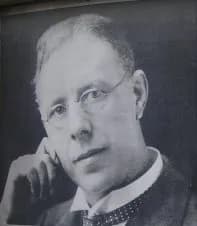
Harry Brearley’s accidental discovery of stainless steel at a Sheffield research laboratory transformed the city’s cutlery trade and established a material now used worldwide. Born in Sheffield on 18 February 1871, Brearley left school at twelve to work in a local steelworks, later studying steel production and chemical analysis in evening classes.
From Steelworks Boy to Laboratory Director
Brearley’s early career was rooted in the city’s industrial economy. After starting in a steelworks at the age of twelve, he became a general assistant in his company’s chemical laboratory and continued his education at night. In 1908, two of Sheffield’s largest steelmaking firms, Thomas Firth and Sons and John Brown and Co, jointly financed the Brown Firth Research Laboratories and appointed Brearley as its director.
The Accidental Discovery at Brown Firth
Brearley’s brief was to develop new steels capable of resisting erosion in gun barrels, a problem that had grown more acute as arms manufacturing expanded before the First World War. He concentrated on adding chromium to steel, an element known to raise its melting point, and experimented with carbon levels of around 0.2 weight per cent and chromium content between 6 and 15 weight per cent.
The breakthrough came by chance. While attempting to etch experimental chromium steel samples for metallographic examination, Brearley found that they resisted attack by nitric acid to a remarkable degree. The first true stainless steel, an alloy containing 0.24 weight per cent carbon and 12.8 weight per cent chromium, was produced in an electric furnace on 13 August 1913. The American Society for Metals records casting number 1008, with a composition of 12.8 per cent chromium, 0.44 per cent manganese, 0.2 per cent silicon, 0.24 per cent carbon and 85.32 per cent iron, as having been cast on 20 August 1913.
From "Rustless Steel" to Stainless Cutlery
Brearley initially called his invention "rustless steel." The name "stainless steel" is credited to Ernest Stuart of R.F. Mosley’s, a cutlery manufacturer based at Portland Works in Sheffield. Brearley quickly recognised that the material’s resistance to food acids such as vinegar and lemon juice made it ideal for mass-produced cutlery, which had long suffered from rusting in domestic use.
Despite the commercial potential, Brearley’s time at Brown Firth ended in 1915 following patent disputes. He subsequently joined Brown Bayley’s Steel Works, where he became a director in 1925. In 1920, he was awarded the Bessemer Gold Medal by the Iron and Steel Institute.
A Legacy Cast in Sheffield Steel
Brearley died on 14 July 1948 in Torquay, Devon, but his connection to Sheffield endures. In 1941, he established The Freshgate Trust Foundation, a charitable trust operating in Sheffield and South Yorkshire to provide opportunities in travel, education, arts and music for people from modest backgrounds. A 42-foot mural by artist Sarah Yates, known as Faunagraphic, was painted on a building on Howard Street in Sheffield to commemorate the centenary of his invention.
Sheffield’s identity as a steel city was already centuries old when Brearley produced his first chromium alloy, yet the discovery gave the local industry a new global prominence. The laboratories where the work took place, the cutlery works that first marketed the material and the streets where his memory is now painted all form part of the city’s continuing claim as the home of stainless steel.