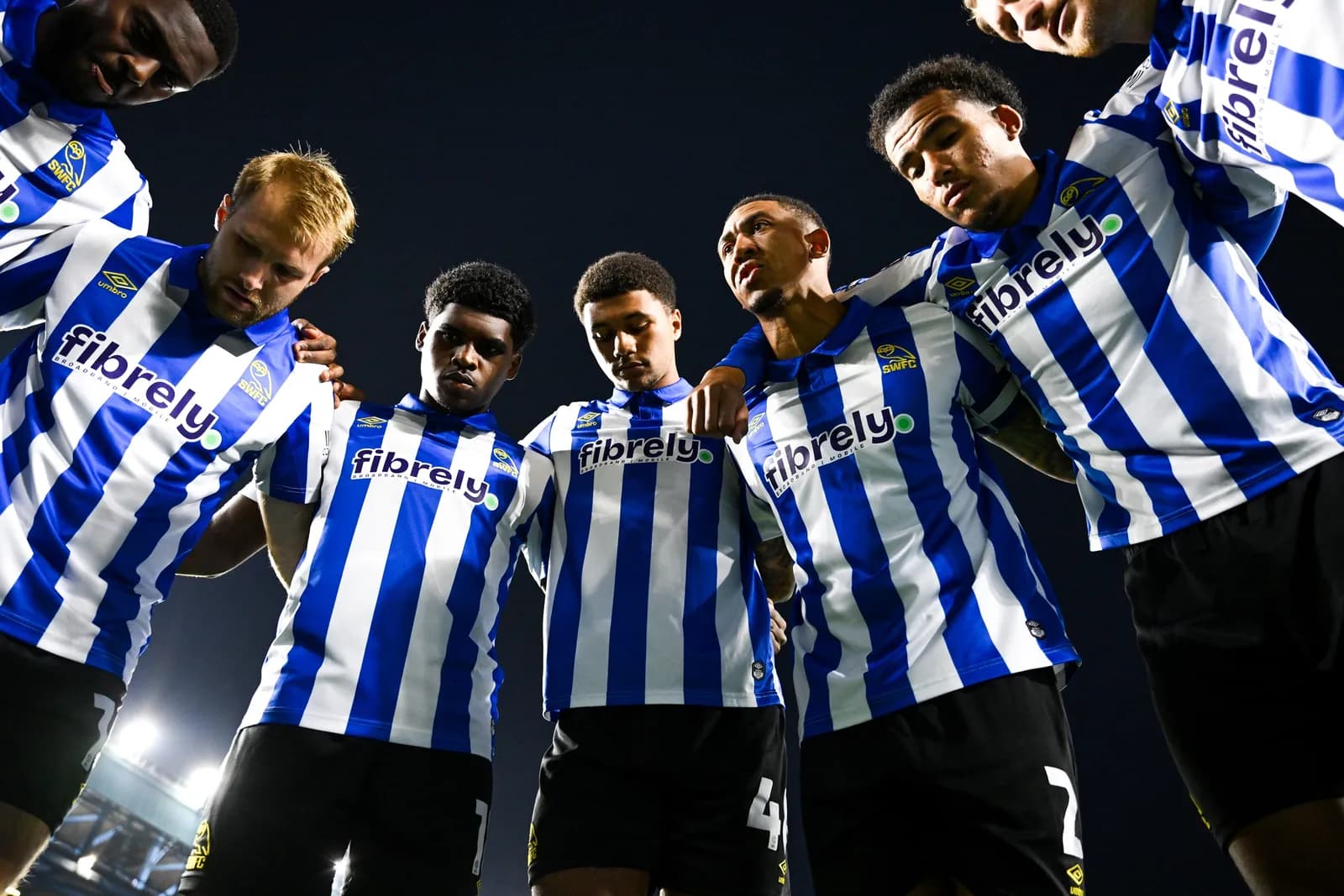
On 24 October 1857, two Sheffield cricketers met at Parkfield House in Highfield and changed sporting history forever. Nathaniel Creswick and William Prest founded Sheffield Football Club that day, creating not merely a local team but the world's first official football club.
The Cricketers' Winter Solution
Both men were members of Sheffield Cricket Club, where informal kickabouts had taken place since 1855 to keep cricketers fit through winter. Creswick, a solicitor and heir to a silver-plate manufacturing family, had been born in Sheffield on 31 July 1831 and educated at Sheffield Collegiate School. Prest, born in York on 1 April 1832, had moved to Sheffield as a child and established himself as a wine merchant. He was also an accomplished cricketer who captained Yorkshire and played sixteen times for the county between 1852 and 1862.
Their initial headquarters was a greenhouse on East Bank Road, lent by Thomas Asline Ward, with an adjacent field serving as the first playing ground. Creswick became the club's first honorary secretary and treasurer, positions he held until William Chesterman succeeded him in February 1862.
Writing the Sheffield Rules
The club's most enduring contribution came on 28 October 1858, when members gathered at the Adelphi Hotel on Arundel Gate to approve the first written rules of football. Published in 1859 as "Laws for the guidance of playing members," the Sheffield Rules introduced several innovations that shaped the modern game.
Handling was forbidden except for "pushing" or "hitting" the ball with hands, and for making a fair catch. Hacking, tripping, and holding were banned, though pushing and charging remained permitted. The rules awarded a free kick for a fair catch, though no goal could be scored directly from such a kick. Goals could only be achieved by kicking, with no offside law in place. When the ball went out of play, it was thrown in at right angles to the touchline by whichever team touched it first. If the ball crossed the goal line, a "kick-out" was taken from twenty-five yards.
The rules evolved over subsequent years. By 1862, goals were specified as twelve feet wide by nine feet high, and a "rouge" was introduced as a tiebreaker borrowed from the Eton Field Game. The Sheffield FA, formed later, refined these laws further; by 1867 handling was completely banned, corner kicks were introduced, and the fair catch was abolished before being briefly reinstated.
First Matches and Local Rivalries
Sheffield FC's first match against external opposition came in December 1858 against the 58th Army Regiment. However, the fixture that secured its place in football lore occurred on 26 December 1860, when Sheffield played Hallam FC at Sandygate Road in Crosspool. Sheffield won 2–0 in what remains recognised as the first inter-club match in football history. Sandygate, Hallam FC's ground, dates to 1804 and stands as the world's oldest surviving football ground.
The club's first match outside Sheffield took place on 2 January 1865, when they travelled to Nottingham to face Notts County at the Meadows Cricket Ground, winning 1–0 under Nottingham Rules with eighteen players per side. On 31 March 1866, Sheffield faced a London team at Battersea Park under FA rules, losing 2–0 in the first inter-city match.
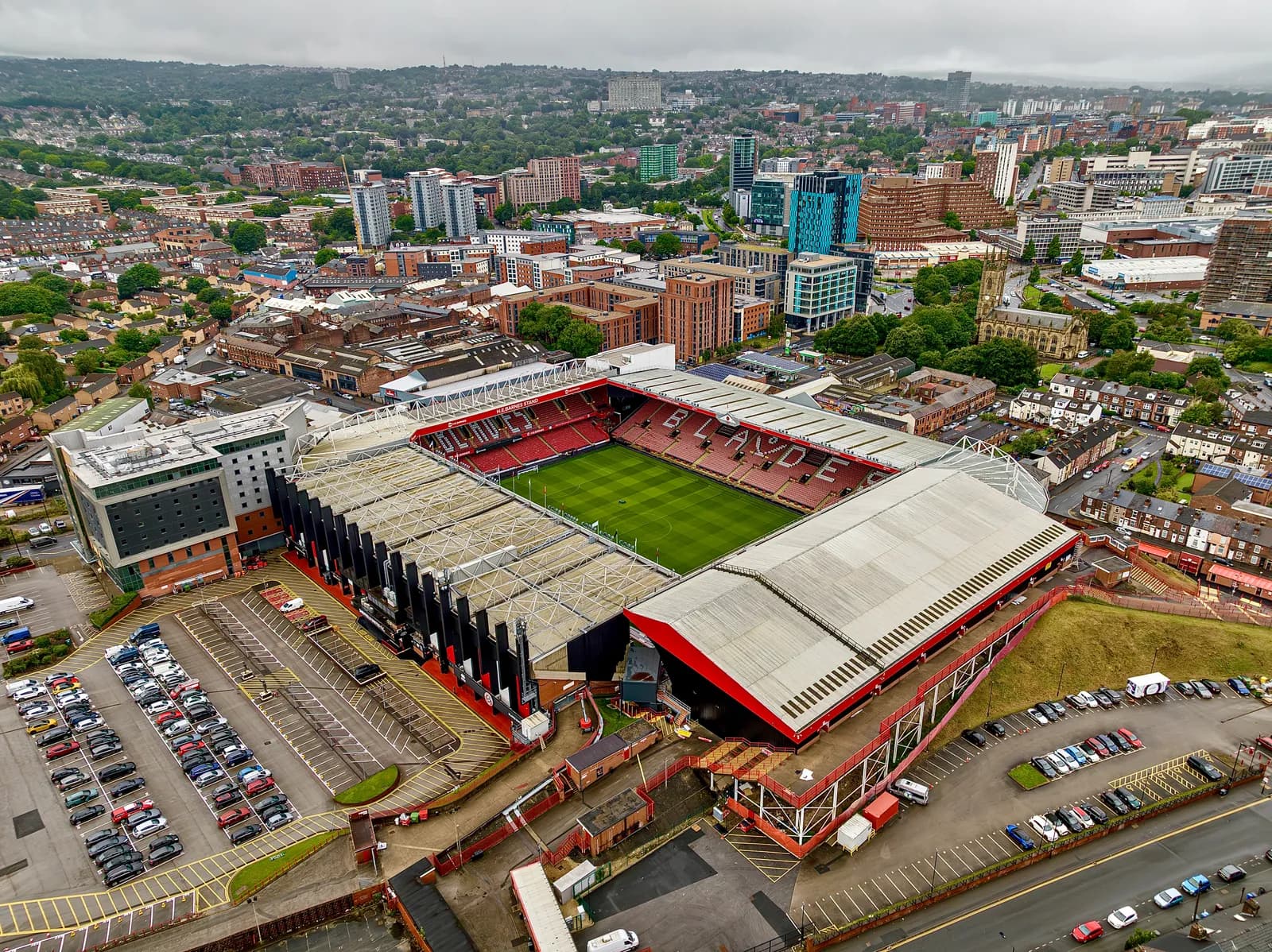
The club entered the FA Cup for the first time in the 1873–74 season, reaching the fourth round in both 1877–78 and 1879–80. On 14 October 1878, Sheffield made history again by playing the first match under floodlights at Bramall Lane, attracting approximately twenty thousand spectators.
The Sheffield Rules vs The FA
Sheffield FC joined the Football Association on 30 November 1863 but continued playing under Sheffield Rules for over a decade. The two codes differed most significantly on offside; the FA's stricter law requiring three opponents between the player and goal was repeatedly rejected by the Sheffield FA between 1872 and 1876. The FA similarly rejected Sheffield's proposal for kick-ins in 1875–76.
The impasse ended in 1877 when the FA accepted a compromise throw-in proposal from Clydesdale FC, allowing the ball to be thrown in any direction. The Sheffield FA then adopted FA laws, effectively unifying the game's rules across England.
From Glory Days to Grassroots
Sheffield FC won the FA Amateur Cup in 1904, defeating Ealing 3–1. The club reached the FA Vase final in 1977, drawing 1–1 with Billericay Town at Wembley before losing 2–1 in a replay at Nottingham's City Ground. They won the Yorkshire League Cup in 1978 and have claimed the Sheffield and Hallamshire Senior Cup five times, first in 1994.
In 2004, FIFA awarded Sheffield FC the Order of Merit Centennial Award, an honour shared only with Real Madrid. The club was inducted into the English Football Hall of Fame in 2007, its 150th anniversary year. That October, FIFA president Sepp Blatter attended the anniversary dinner, and football legend Pelé opened an exhibition of the original handwritten rules as guest of honour.
Global Recognition, Local Roots
Following the 155th anniversary celebrations in 2012, 24 October was recognised as World Football Day. The club maintains its original ethos through the Sheffield FC Foundation, promoting integrity, respect, and community values globally.
Today Sheffield FC competes in the United Counties League Premier Division North, the ninth tier of English football. Since 2001 they have played at the Home of Football Stadium on Sheffield Road in Dronfield, Derbyshire, a facility with a capacity of 2,089 including 250 seats.
The rivalry with Hallam FC, known as the Rules Derby, continues as football's oldest local derby. What began in a Sheffield greenhouse in 1857 has grown into a global phenomenon, yet the world's first football club remains rooted in the city where the beautiful game first found its structure.